Analysis of DarkMatter Onion
Comprehensive operational history and feature review of the hidden service architecture.
/// Executive Summary
DarkMatter Onion operates as a decentralized hidden service within the Tor network architecture. Conceived as a streamlined, privacy-first platform, it has garnered attention from cybersecurity analysts for its strict adherence to modern cryptographic standards. Unlike legacy platforms that relied on centralized wallets and Bitcoin (BTC), DarkMatter Onion represents a paradigm shift toward privacy-coin exclusivity and zero-knowledge architectures.
This archive studies the deployment of the DarkMatter marketplace as an analytical framework for understanding contemporary darknet topologies. By enforcing mandatory PGP (Pretty Good Privacy) encryption for all operational communications and utilizing Monero (XMR) exclusively, the platform mitigates numerous attack vectors traditionally exploited by threat actors and forensic analysts.
/// Technical Architecture
Walletless Escrow
The platform operates entirely on a walletless direct-payment system. Unlike centralized exchanges, users do not deposit funds into a market-controlled wallet. Transactions are executed per-order, fundamentally neutralizing exit-scam incentives and reducing honeypot risks.
XMR Monero Integration
DarkMatter strictly enforces the use of Monero (XMR). By utilizing ring signatures, stealth addresses, and RingCT, the currency obscures the sender, receiver, and transaction amount, aligning perfectly with the platform's operational security doctrines.
Mandatory PGP 2FA
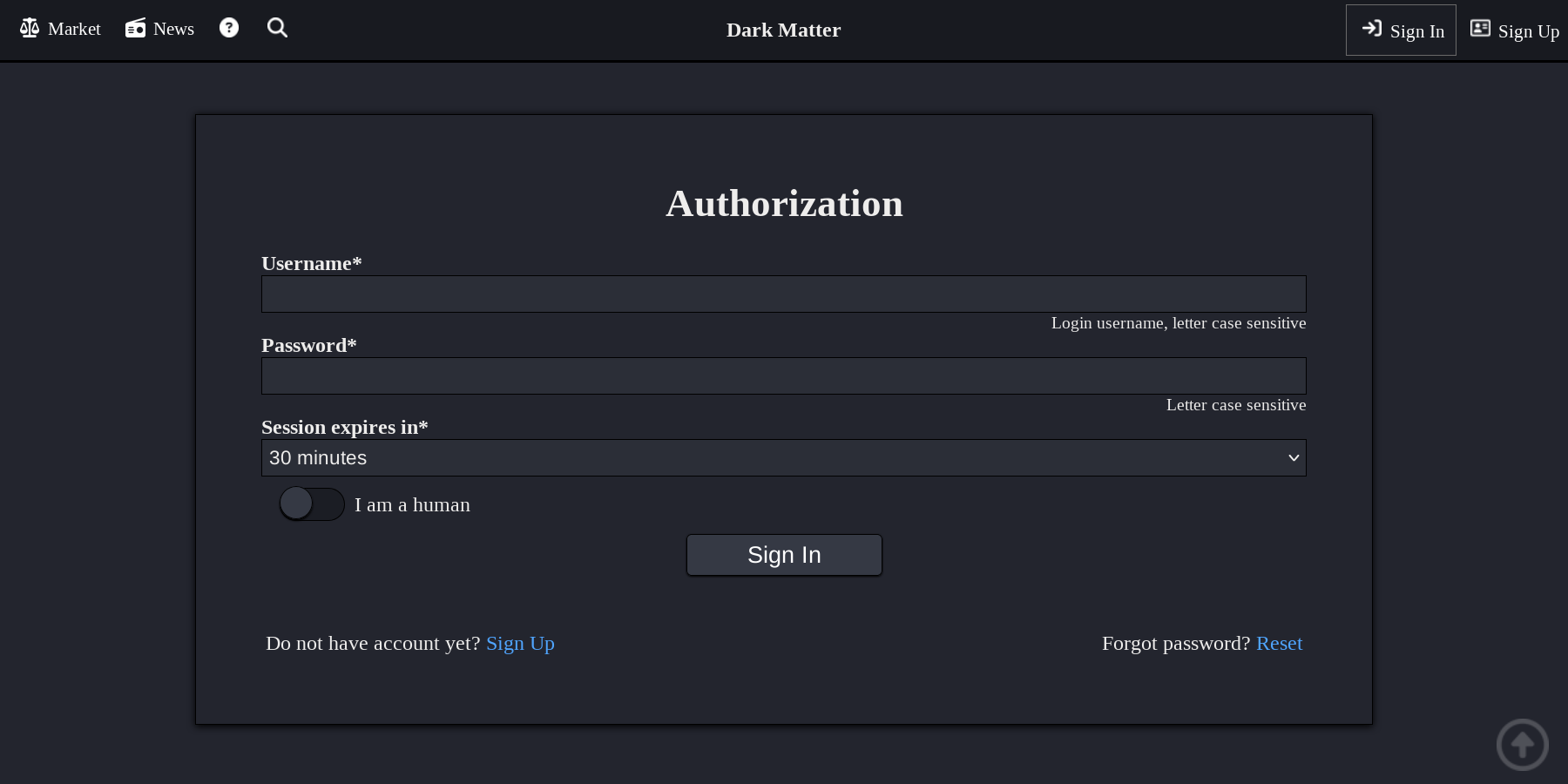
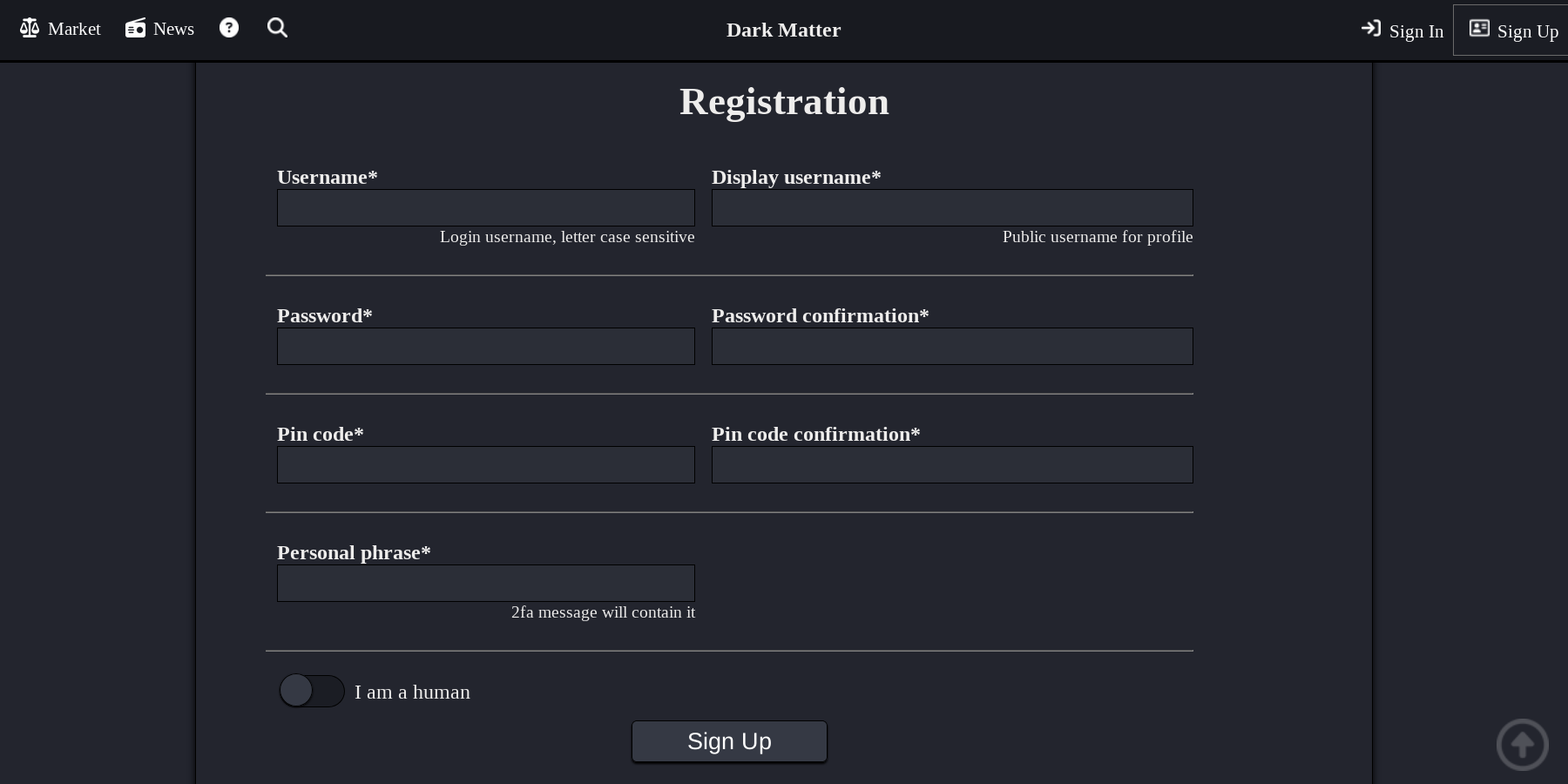
Account authentication requires mandatory 2-Factor Authentication via PGP. To initiate a session, the user must decrypt a server-generated message using their public key. This prevents brute-force intrusions and credential stuffing attacks.
/// Historical Timeline
Initial private routing nodes established. DarkMatter Onion developers focused exclusively on DDoS mitigation protocols, deploying a customized anti-bot validation screen to protect the main rendering clusters from Layer 7 flooding.
Limited invite-only beta testing for node stability. The walletless escrow logic was implemented, undergoing rigorous stress testing to ensure Monero daemon synchronization correctly identified real-time blockchain confirmations.
Official network-wide mirroring. Observers noted the generation of multiple authenticated onion links distributed via signed PGP declarations. Strict vendor bond requirements were enforced to establish trust metrics within the ecosystem.
/// Platform Interface Preview
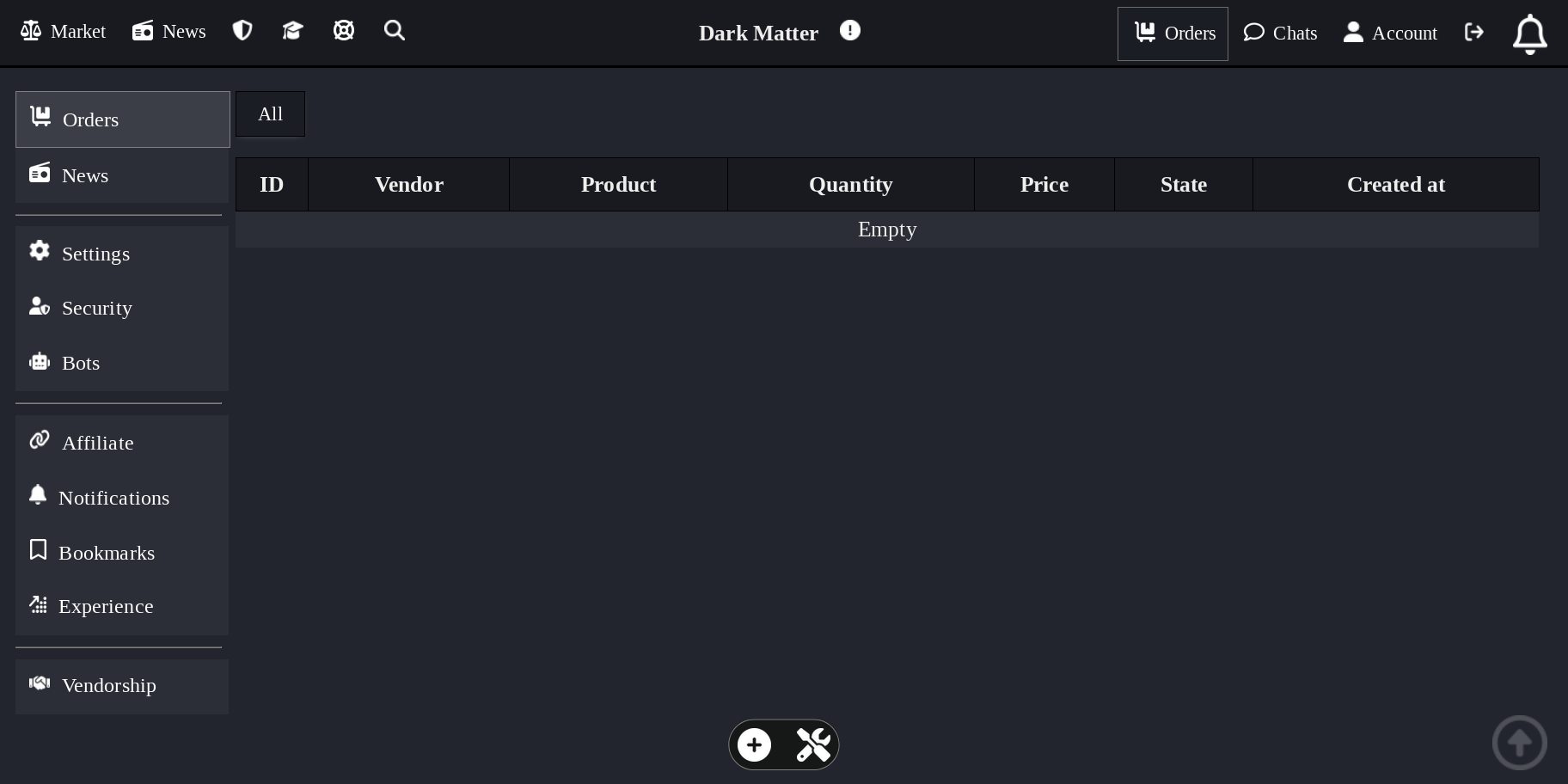
Archival captures of the DarkMatter user interface. These GUI instances highlight the utilitarian design language favored by modern darknet ecosystems to reduce server-side load and enforce strict operational security.
/// Community & Statistics
Analytical observations indicate a rapidly growing user base reliant on the DarkMatter infrastructure. By mandating a strict vendor verification process—often requiring high upfront bonds or demonstrable proof of reputation from legacy markets—the environment inherently attempts to filter low-effort threat actors. The community surrounding the marketplace values platform stability; consequently, the darkmatter onion link routing topology relies heavily on decentralized mirrors to prevent single points of failure.